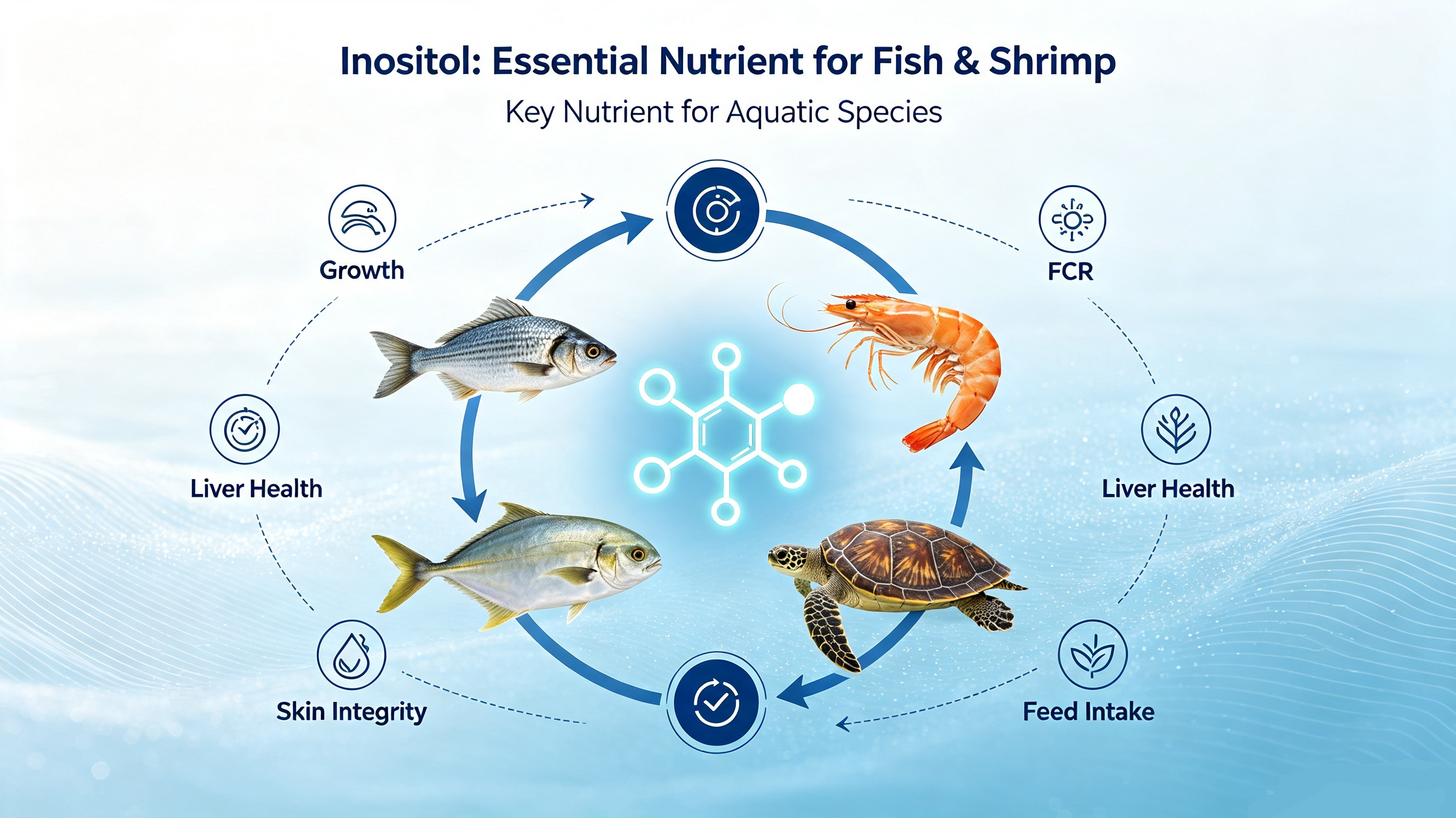
As a vital vitamin-B-like nutrient, inositol cannot be sufficiently synthesized by fish, shrimp and soft-shelled turtles, requiring mandatory dietary supplementation. Inositol deficiency triggers poor growth, high FCR, fatty liver syndrome and body surface lesions in aquatic animals. Reasonable species-specific dosage supplementation optimizes lipid metabolism, protects organ health and improves aquaculture productivity.
Inositol is a vitamin‑B‑like essential nutrient. While terrestrial animals can synthesize sufficient inositol endogenously, fish, shrimp and soft‑shelled turtles rely on dietary supplementation to meet their nutritional demands. Inositol deficiency causes stunted growth, fatty liver syndrome and skin lesions, and different aquatic species require species‑specific optimal inclusion levels.
Basic Properties
Inositol appears as a white, sweet‑tasting crystalline powder, with only one biologically active isomer. It naturally exists in animal visceral tissues and cereal germs. Phytate‑bound inositol found in plant ingredients exhibits low bioavailability in aquatic animals, making exogenous supplementation indispensable for aquafeed formulas.
Hazards of Inositol Deficiency
Juvenile aquatic animals are more vulnerable to inositol deficiency. Typical deficiency symptoms include poor appetite, retarded growth, elevated FCR, skin necrosis, fin erosion, lethargy, pale internal organs and fatty liver syndrome.
Recommended Dietary Dosage
Common carp: 400–500 mg/kg of feed
Salmon: 300–500 mg/kg of feed
Shrimp: 200 mg/kg of feed for optimal growth performance
Eels and soft‑shelled turtles also require additional inositol supplementation in formulated diets.
Conclusion
Inositol plays a vital role in regulating lipid metabolism, maintaining visceral organ health and improving overall growth performance in aquaculture. Targeted inositol supplementation effectively prevents fatty liver and body surface diseases, boosts feed intake and weight gain, and reduces economic losses in aquaculture production.