Categories
Vitamin C & Skin Photoaging: What Does the Clinical Evidence Actually Show?
A closer look at the clinical evidence behind topical vitamin C.
A 2023 systematic review in the Journal of Cosmetic Dermatology analyzed 7 randomized controlled studies involving 139 volunteers for topical vitamin C in melasma and photoaging. Evidence suggested improvements in pigmentation, skin texture and wrinkles, but no significant benefit for skin hydration vs. placebo.
Aug 20th,2026
49 Views
Clinical Evidence at a Glance
The included studies involved participants aged 23–72 years, with study durations ranging from 2 weeks to 6 months. Vitamin C concentrations ranged from 3.75% to 20%, while six of the seven studies included a placebo or control group.
What Did the Studies Actually Find?
01 — Pigmentation
Objective assessments found significant lightening in vitamin C-treated skin.
This supports the potential role of topical vitamin C in managing uneven pigmentation, although the authors emphasize that the existing evidence base remains relatively limited
02 — Skin Texture & Wrinkles
Studies evaluating skin topography reported that treated skin appeared smoother and less wrinkled, with biopsy findings providing additional support for changes in skin structure.
03 — Hydration
The result was different for hydration.
Skin hydration improved in both vitamin C and placebo-treated areas, with no significant difference between the two groups. This is an important reminder that the benefits of an active ingredient should not be assumed across every skin parameter.
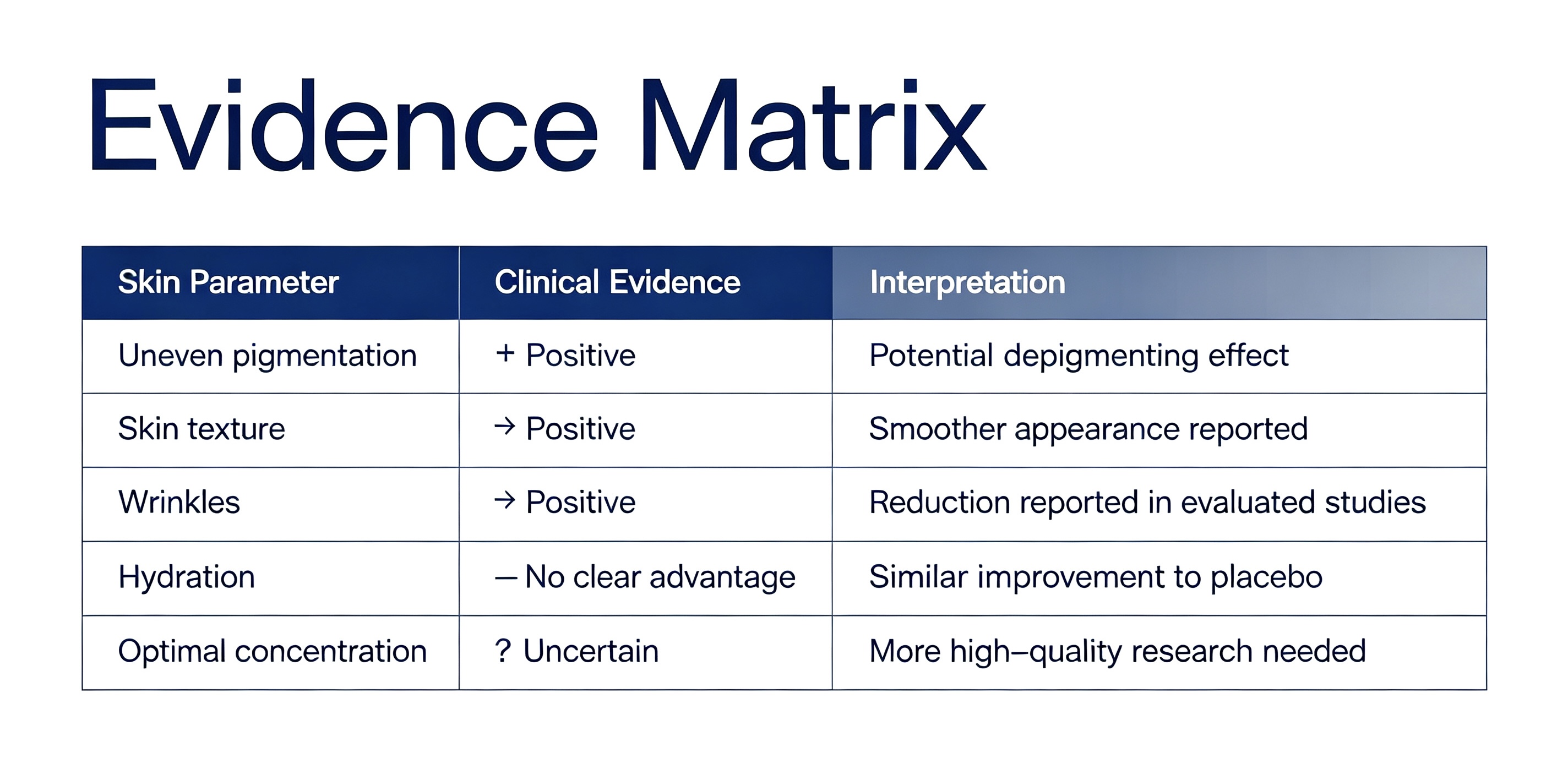
The takeaway: The evidence supports vitamin C as a promising topical ingredient for pigmentation and photoaging-related skin changes, but it does not justify treating every concentration or formulation as equally effective.
Why Does Vitamin C Matter in Photoaging?
Ultraviolet radiation can increase oxidative stress in the skin and contribute to processes associated with photoaging.
Vitamin C is a water-soluble antioxidant and is also involved in collagen synthesis. Its potential skincare role therefore extends beyond the simple concept of “brightening.”
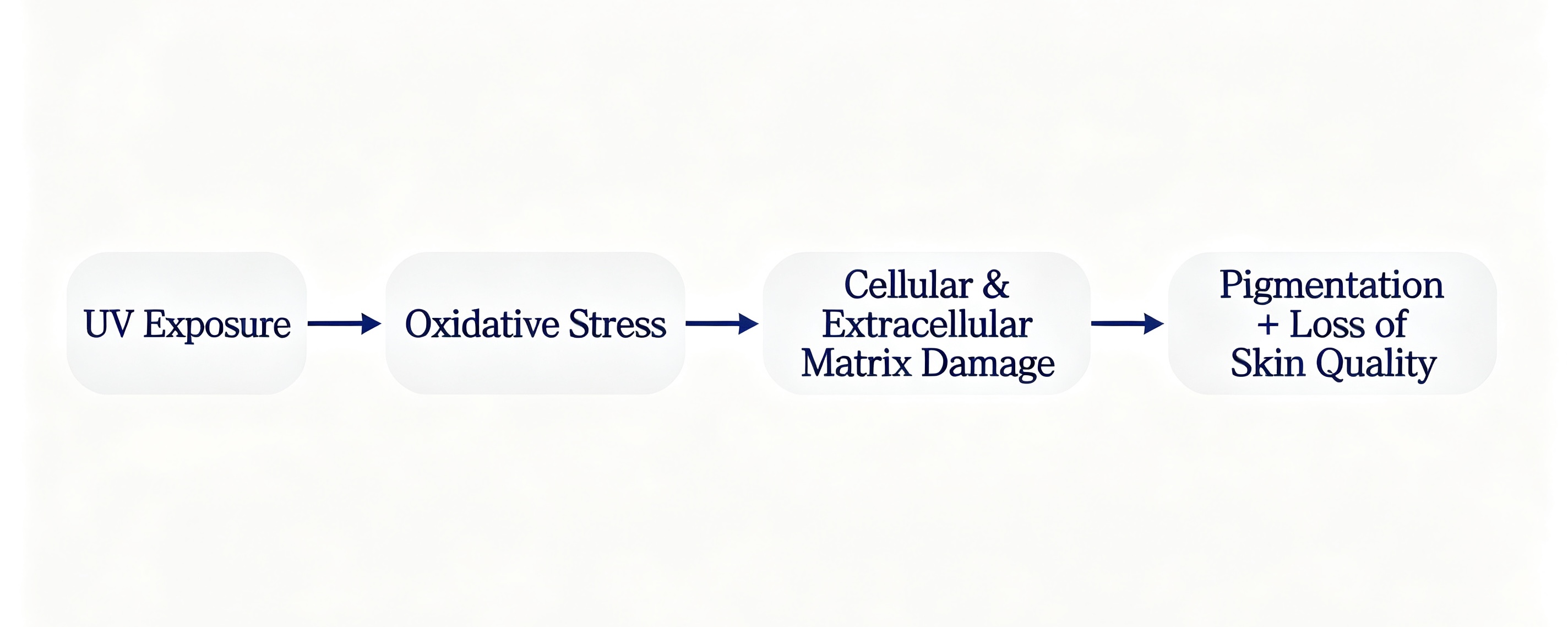
Vitamin C may intervene through antioxidant defense and collagen-related biological pathways.
However, the clinical outcome depends not only on the ingredient itself, but also on concentration, formulation, stability, skin delivery and duration of use.
Vitamin C + Vitamin E: A Closer Look at Antioxidant Synergy
The interaction between vitamins C and E has also attracted scientific interest.
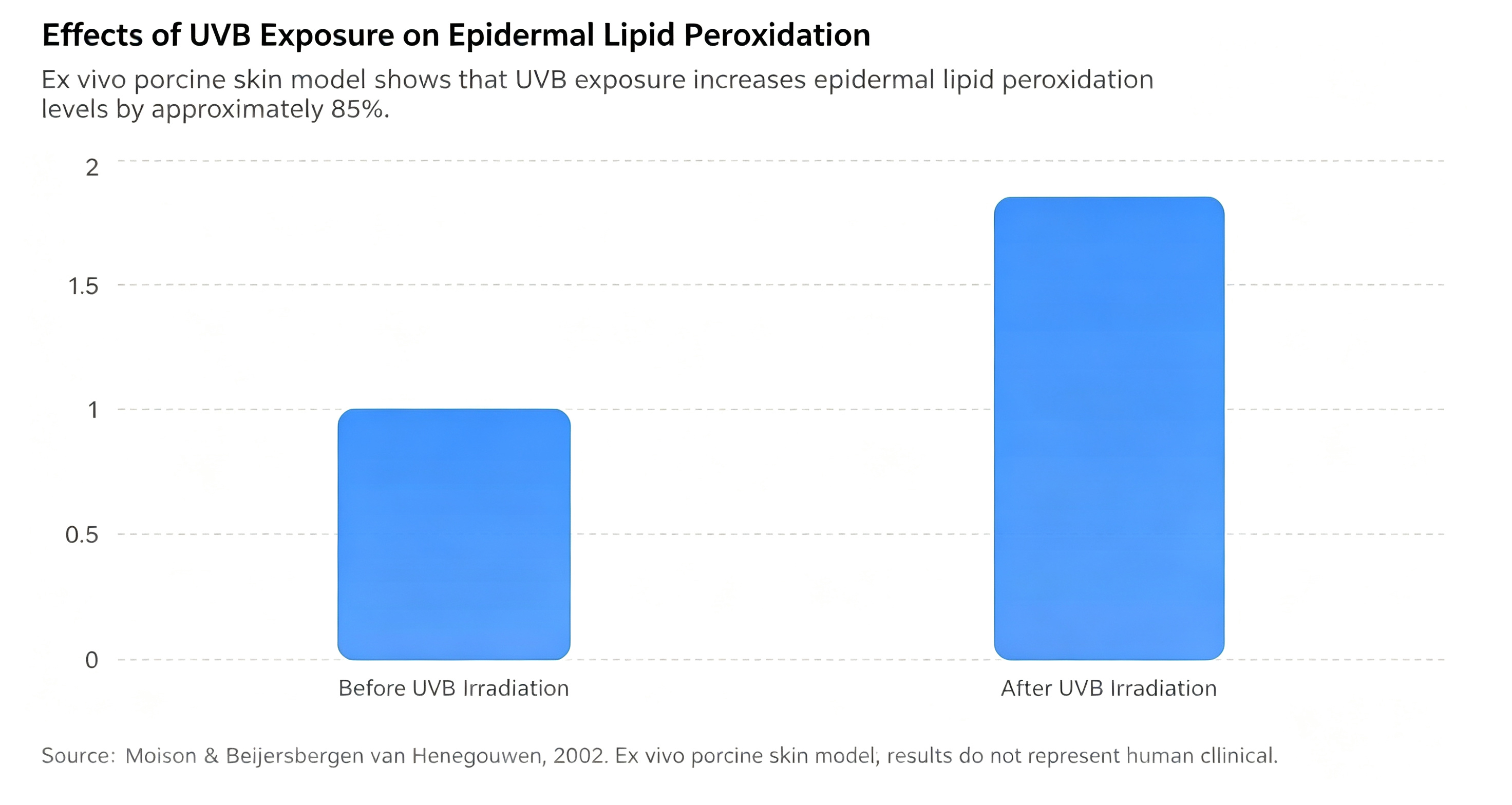
In a study using an ex vivo pig-skin model, topical vitamin E, vitamin C, or both were evaluated against UVB-induced lipid peroxidation.
UVB exposure increased epidermal lipid peroxidation by approximately 85%.
Topical vitamin C or vitamin E completely prevented the measured increase under the experimental conditions. When the two antioxidants were applied together, complete protection was also observed while requiring lower antioxidant doses than either antioxidant alone. The study also found that vitamin E was more stable under UVB exposure in the presence of vitamin C.
Another experimental study used a formulation containing 15% L-ascorbic acid + 1% α-tocopherol. The combination provided significant protection against erythema and sunburn-cell formation, and the four-day treatment produced an approximately 4-fold antioxidant protection factor in the experimental model.
Important distinction
These antioxidant studies provide mechanistic and experimental evidence, not proof that a cosmetic formulation will produce the same effect in human skin.
That distinction matters when translating scientific findings into cosmetic applications.
