As a major energy source, lipids deliver a critical protein‑sparing effect in aquafeed. However, fish and shrimp exhibit distinct differences in lipid tolerance and utilization. Inappropriate dietary fat levels can restrict growth performance and compromise aquatic animal health and final product quality.
Core Benefits of Dietary Lipids
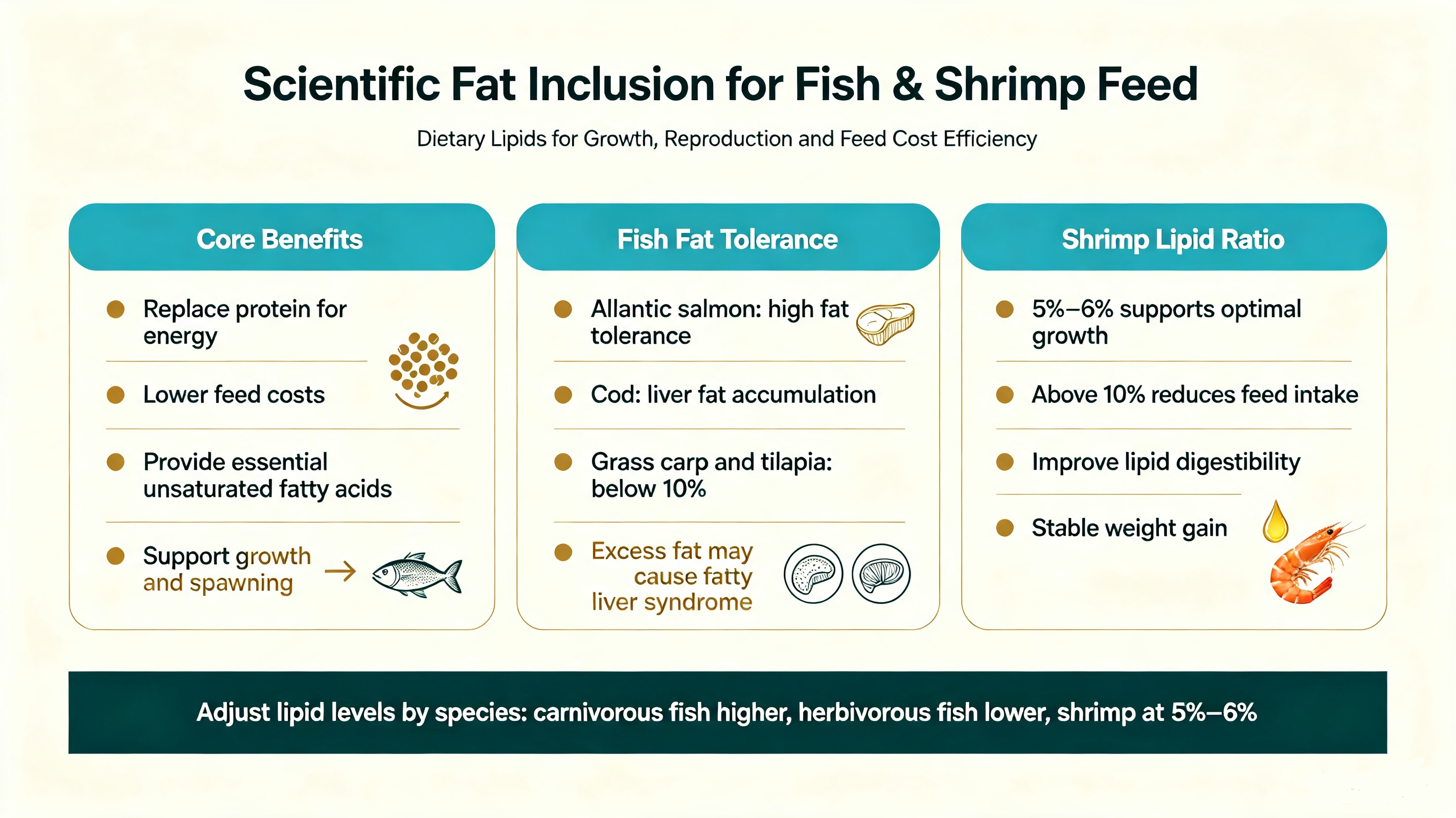
Lipids replace protein for energy supply, effectively lowering feed formulation costs. Herbivorous aquatic species efficiently utilize carbohydrates and thus require lower dietary fat inclusion.
They provide essential unsaturated fatty acids to support regular growth and reproductive performance. Broodstock specifically requires adequate lipid accumulation to sustain successful spawning.
Moderate fat inclusion promotes steady weight gain, while excessive fat intake only results in redundant lipid deposition in tissues with no growth benefit.
Fat Tolerance Characteristics of Fish
Cold‑water carnivorous fish such as Atlantic salmon show high fat tolerance and mainly deposit lipids in muscle tissue, whereas cod tends to accumulate fat in the liver.
Freshwater herbivorous fish including grass carp and tilapia have low lipid tolerance, with the recommended dietary fat level below 10%. These species rely primarily on carbohydrates for energy.
Excessive dietary fat triggers fatty liver syndrome, deteriorated flesh quality and precocious male maturation. Short‑term low‑fat feeding before harvest can effectively alleviate these adverse issues.
Ideal Lipid Ratio for Shrimp
A dietary lipid level of 5%–6% supports the optimal growth of shrimp. Fat inclusion exceeding 10% suppresses feed intake, reduces lipid digestibility and significantly slows weight gain.
Conclusion
Protein, lipids and carbohydrates interact dynamically in animal metabolism, and no single universal fat ratio suits all aquaculture species. For optimized and sustainable farming performance, formulators should increase lipid levels for carnivorous fish, restrict fat inclusion for freshwater herbivores, maintain a 5%–6% lipid range for shrimp diets, and select oil sources rich in unsaturated fatty acids.