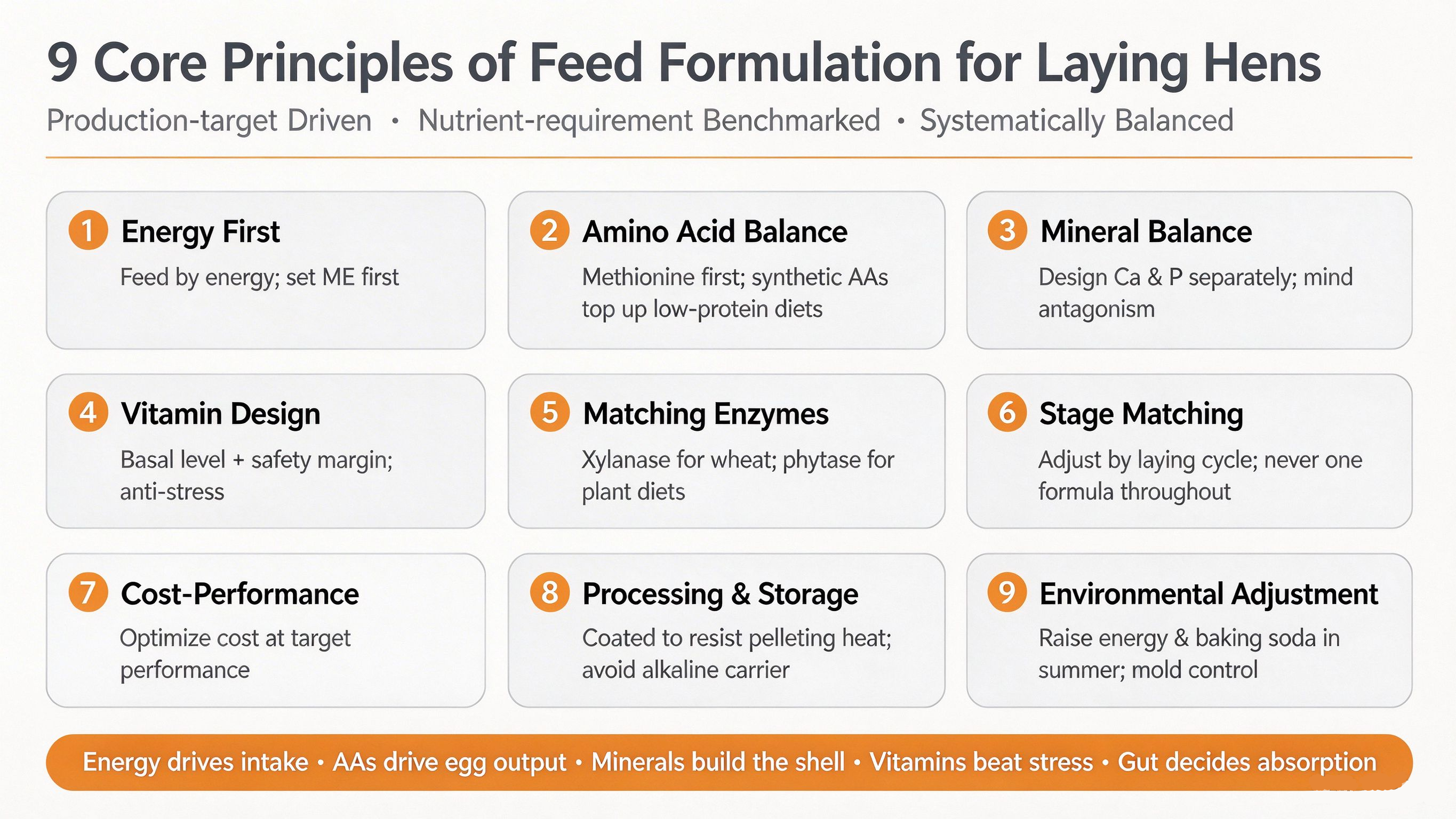
A sound feed formula is not stacking ingredients but balancing production targets, nutrient requirements, digestibility and cost.
Feed typically accounts for over 60% of layer production cost — the No.1 lever on profitability. A sound formula is not stacking ingredients but balancing production targets, nutrient requirements, digestibility and cost. The nine quick principles below help you grasp the design logic at a glance.
1. Energy First (Feed by Energy)
Layers eat by metabolizable energy — set ME first, then derive the other nutrients. As intake drops under summer heat, raise both energy and nutrient density.
2. Amino Acid Balance
Digestible amino acids, not crude protein, are the core; satisfy methionine first; top up low-protein diets with synthetic amino acids.
3. Mineral Balance
Design calcium and phosphorus separately (Ca 3.6%–3.8%, available P 0.30%–0.34%); mind Zn–Cr, Ca–Zn, Cu–Fe antagonism; add sodium bicarbonate in heat.
4. Vitamin Design
NRC is the minimum — build in a safety margin; A, D₃ and E oxidize easily and need antioxidants; boost E, selenium and B vitamins under stress.
5. Matching Enzymes
Wheat needs xylanase, soybean meal β-mannanase, and any plant diet phytase; cap cottonseed, rapeseed and peanut meal.
6. Stage Matching
Control energy and protein in rearing, ramp calcium and methionine at lay start, peak density at 25–48 weeks, and moderately raise calcium in late lay.
7. Cost–Performance Balance
Optimize cost at target performance — replace corn with wheat and soybean meal with alternative meals, adding enzymes and synthetic amino acids.
8. Processing and Storage
Use coated enzymes and probiotics in pellets; avoid alkaline limestone as a premix carrier; add antioxidants to oxidizable oils.
9. Environmental Adjustment
In summer raise ME, methionine, calcium, vitamin E and selenium and add sodium bicarbonate; in winter moderately lower density; strengthen mold control in mycotoxin seasons.
Gut First
Good nutrition fails if the gut cannot absorb — control non-starch polysaccharides and use acidifiers and probiotics judiciously.
One-Sentence Summary
Energy drives intake, amino acids drive egg output and weight, minerals build the shell, vitamins beat stress, enzymes fix ingredient limits, gut health decides absorption, and additives are the finishing touch.